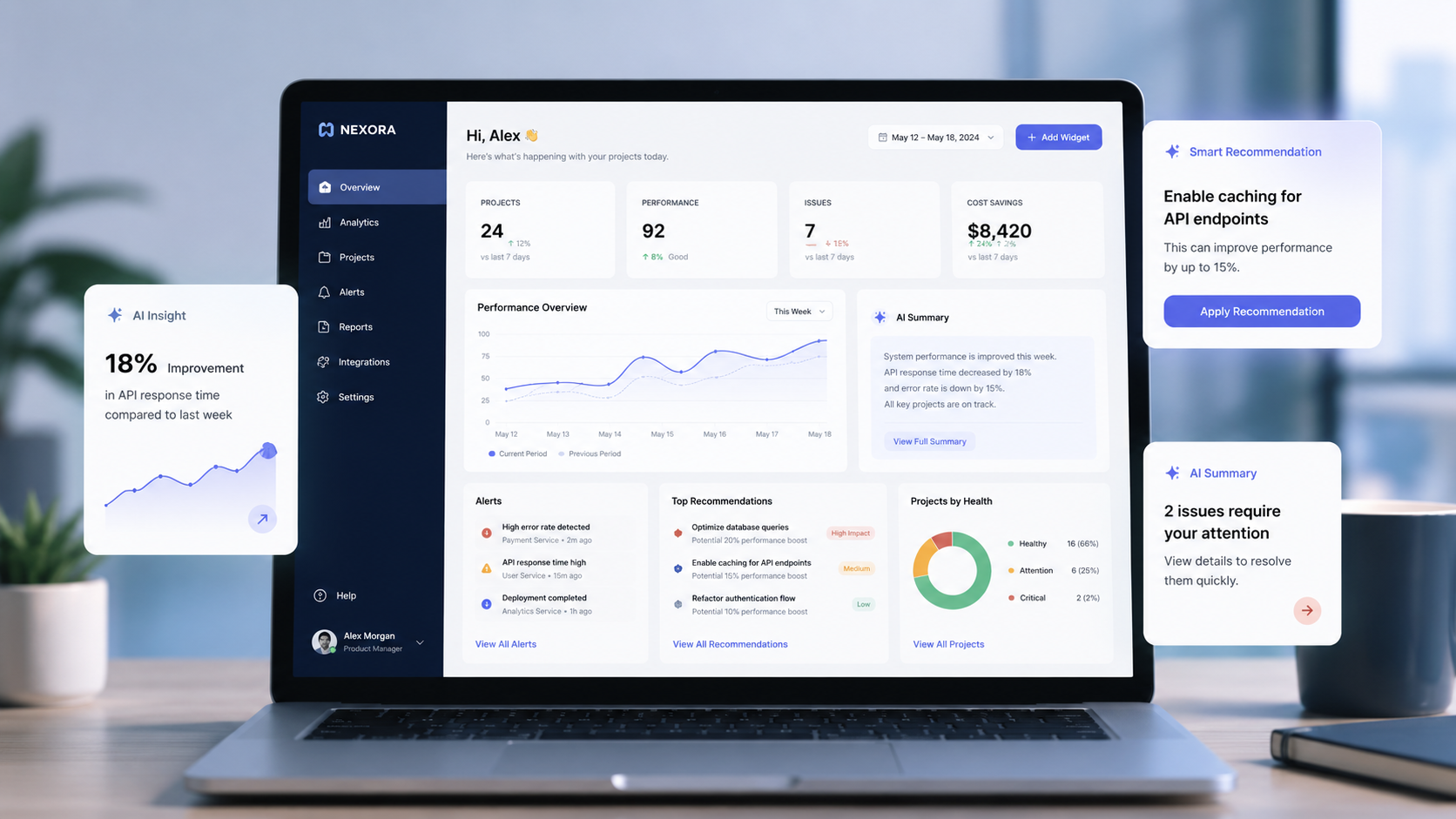
Building Scalable Platforms for Growing Businesses
In today’s fast-moving digital world, businesses are not only looking for software. They are looking for reliable, scalable, and future-ready platforms that can grow with their operations. A small business today can become a large enterprise tomorrow, and the technology behind it must be ready to support that growth.
Scalable platforms help businesses manage more users, more data, more services, and more complex workflows without breaking performance or user experience. Whether it is an e-commerce system, healthcare platform, school management software, CRM, ERP, or a custom business dashboard, scalability is one of the most important foundations of long-term digital success.
“A scalable platform is not built only for today’s users. It is designed for tomorrow’s growth.”
Why Scalability Matters for Modern Businesses
Many businesses start with a simple website or basic software solution. At the beginning, the system may work well with a small number of users and limited features. But when the business grows, new challenges appear.
A non-scalable system can face problems like:
Slow loading speed
Server crashes during high traffic
Difficult feature expansion
Poor data management
Security risks
Higher maintenance cost
Bad user experience
When software is not planned properly, every new feature becomes difficult to add. Every traffic increase creates pressure. Every new business requirement becomes expensive and time-consuming.
That is why businesses need platforms that are planned, designed, and developed with scalability from the beginning.
What Is a Scalable Platform?
A scalable platform is a digital system that can handle business growth smoothly. It can support more users, more features, more transactions, and more data without losing performance.
A scalable platform usually includes:
Clean system architecture
Flexible database structure
Secure backend system
Optimized frontend performance
Cloud-ready infrastructure
Modular feature development
Easy integration with third-party tools
Continuous maintenance and monitoring
In simple words, scalability means the platform can grow without needing to rebuild everything from scratch.
Small Platform + Poor Planning = Future Problems

Small Platform + Scalable Architecture = Long-Term Growth
Core Principles of Building Scalable Platforms
Building scalable software is not only about writing code. It requires proper planning, research, design thinking, development strategy, and continuous improvement.
1. Start with Clear Business Goals
Before building any platform, the business goal must be clear. A scalable platform should solve real business problems, not just look modern.
Important questions include:
Who will use the platform?
What problems will it solve?
How many users may use it in the future?
What features may be added later?
What type of data will be stored?
What integrations may be needed?
Without clear goals, the platform may become confusing, expensive, and difficult to maintain.
2. Design a Flexible System Architecture
System architecture is the backbone of any scalable platform. If the foundation is weak, the platform will struggle when the business grows.
A good architecture allows the system to expand step by step.
const scalablePlatform = {
  frontend: "Fast and user-friendly interface",
  backend: "Secure and powerful business logic",
  database: "Structured and optimized data storage",
  cloud: "Flexible hosting and deployment",
  security: "Protected user and business data",
  integrations: "Payment, analytics, CRM, APIs"
};
A flexible architecture helps developers add new modules without damaging existing features.
For example, a school management platform may start with:
Student management
Attendance tracking
Result publishing
Later, it may need:
Mobile app
Online payment
AI-based analytics
Parent communication
HR and payroll
Biometric attendance
If the architecture is scalable, these features can be added smoothly.
3. Build with Modular Development
Modular development means building the platform in separate, manageable parts. Each module has its own purpose and can be improved independently.
Example modules:
User management
Dashboard
Payment system
Notification system
Reporting system
Admin panel
Analytics
Content management
User Module
Payment Module
Notification Module
Analytics Module
Admin Module
This approach makes the platform easier to update, test, and maintain.
4. Focus on Performance from the Beginning
Performance is one of the most important parts of scalability. A platform may have many features, but if it is slow, users will not enjoy using it.
Performance optimization includes:
Fast page loading
Optimized images
Clean code structure
Database query optimization
Caching system
Lightweight UI components
Efficient API response
A growing business needs a platform that can perform well even during high traffic.
Good Performance = Better User Experience
Better User Experience = Higher Trust
Higher Trust = Business Growth
5. Use Cloud Infrastructure
Cloud infrastructure makes it easier to scale platforms based on demand. Businesses do not need to depend on fixed server capacity. Instead, cloud systems allow flexibility.
Benefits of cloud infrastructure:
Easy server scaling
Better uptime
Improved security
Backup and recovery
Cost control
Faster deployment
Global accessibility
For growing businesses, cloud-based platforms are more reliable and future-ready.
6. Keep Security at the Core
As businesses grow, the amount of user data also increases. This makes security more important than ever.
A scalable platform must include:
Secure login system
Role-based access control
Data encryption
Regular backups
API security
Protection from common attacks
Secure payment processing
Activity monitoring
Security should never be treated as an extra feature. It should be part of the platform from day one.
“Growth without security creates risk. Secure scalability creates trust.”
7. Make the User Experience Simple
A scalable platform is not only powerful on the backend. It must also be easy for users to understand and use.
Good UX helps users complete tasks faster and with less confusion.
Important UX principles:
Clear navigation
Simple dashboard
Mobile responsive design
Clean visual hierarchy
Easy forms
Helpful notifications
Fast search and filtering
Consistent design system
A platform may have advanced technology, but if users feel confused, the product will fail to create value.
8. Plan for Future Integrations
Growing businesses often need to connect their platforms with other tools. This may include payment gateways, CRM systems, accounting software, SMS gateways, analytics tools, or AI services.
A scalable platform should be ready for integrations.
Platform + Payment Gateway
Platform + CRM
Platform + SMS API
Platform + Analytics
Platform + AI Automation
When integrations are planned properly, the platform becomes more powerful and useful for business operations.
9. Maintain and Improve Continuously
Software development does not end after launch. A platform needs continuous support, updates, testing, and improvement.
After launch, real users start using the system. Their feedback helps identify what should be improved.
Continuous improvement includes:
Bug fixing
Performance monitoring
Security updates
Feature enhancement
UI/UX improvement
User feedback analysis
Server maintenance
Data backup
A successful platform grows with the business through regular improvement.
Example: Scalable Platform Growth Journey
A business platform can grow in stages.
Stage 1: Basic Website
Stage 2: Customer Dashboard
Stage 3: Admin Panel
Stage 4: Payment Integration
Stage 5: Mobile App
Stage 6: Analytics Dashboard
Stage 7: AI Automation
Stage 8: Enterprise-Level Platform
This step-by-step growth is possible when the platform is built with a scalable mindset.
Benefits of Scalable Platforms for Businesses
A scalable platform gives businesses many long-term advantages.
Key benefits include:
Supports business growth
Reduces future development cost
Improves system performance
Increases customer satisfaction
Makes feature expansion easier
Improves data management
Strengthens business operations
Builds long-term digital stability
Creates competitive advantage
For growing businesses, scalable technology is not a luxury. It is a necessary investment.
Common Mistakes Businesses Should Avoid
Many companies face problems because they build software without proper planning.
Common mistakes include:
Choosing cheap short-term solutions
Ignoring future growth
Poor database planning
No design system
Weak security setup
No maintenance plan
Complex user experience
Lack of testing
No cloud strategy
These mistakes may not create problems immediately, but they become serious when the business starts growing.
How the Right Technology Partner Helps
A reliable technology partner understands both business goals and technical requirements. They do not only develop software. They help businesses plan, design, build, launch, maintain, and improve digital platforms.
The right partner can help with:
Research and discovery
UI/UX design
Frontend development
Backend development
Mobile app development
Cloud and DevOps
QA and testing
AI and automation
Long-term maintenance
A strong technology partner ensures that the platform is not only functional but also scalable, secure, and ready for future growth.
Final Thoughts
Building scalable platforms for growing businesses requires planning, experience, and a long-term vision. A platform should not only solve today’s problem. It should also prepare the business for future opportunities.
As businesses expand, their digital systems must be able to handle more users, more operations, more data, and more complexity. With the right architecture, performance strategy, security, UX, and continuous support, a scalable platform becomes a powerful foundation for business growth.
“The best platforms are not built for the present only. They are designed to grow with the future.”
For any growing business, investing in a scalable platform means investing in stability, efficiency, and long-term success.